Wildfire Smoke Inhalation Prevention Information
Wildfire Smoke Inhalation Prevention
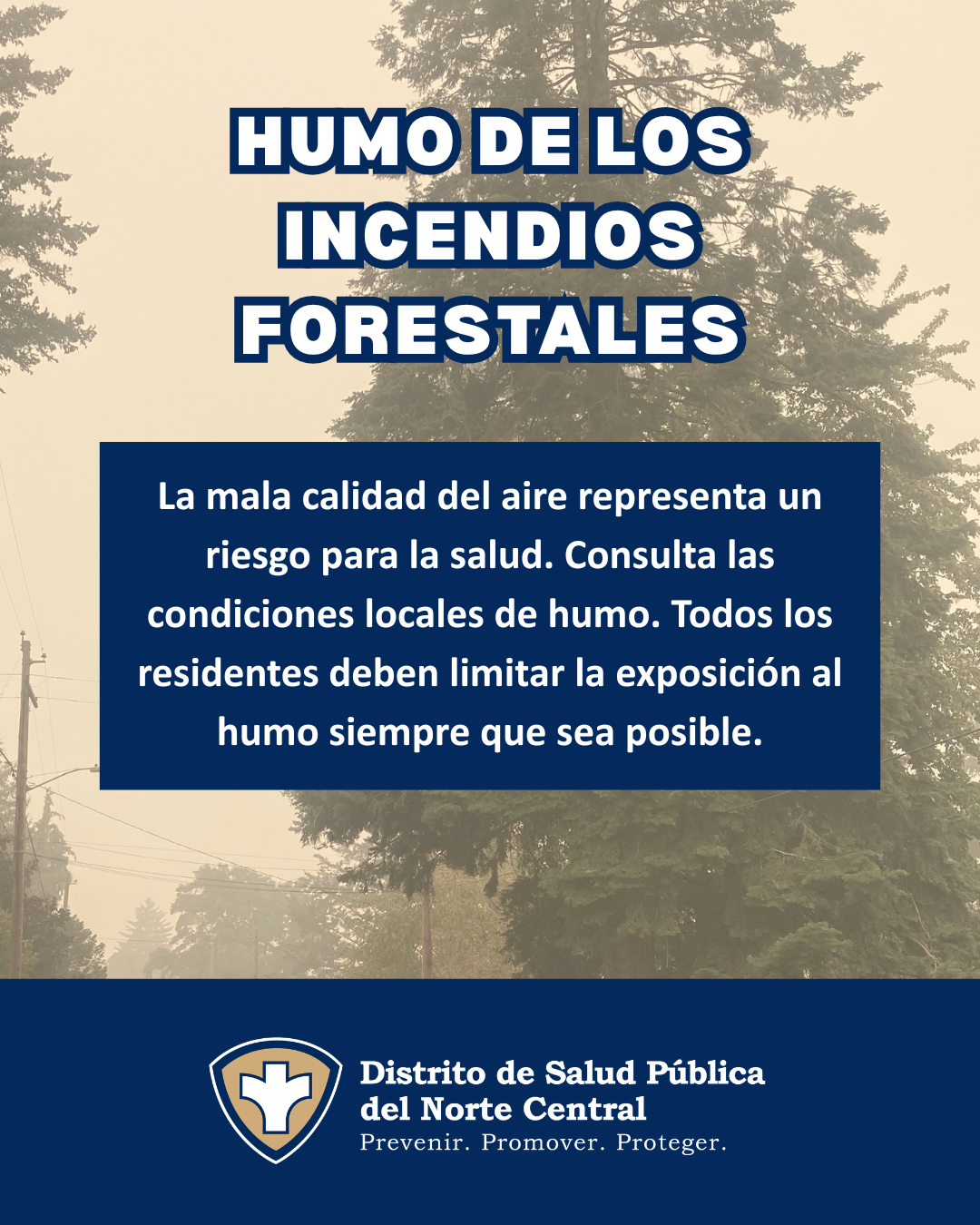
Prevención de la inhalación de humo de incendios forestales
Public Service Announcement
Date: July 1, 2026
To: All Media
From: Martha McInnes, Director, North Central Public Health District
Contact: Mikey Goyette, Communications Coordinator, Mikeyg@ncphd.org
With wildfire season upon us, residents are encouraged to prepare for potential smoke and poor air quality.
Wildfire smoke is a mixture of gases and fine particles from burning trees and vegetation. It can irritate the eyes, make breathing difficult, and worsen chronic heart and lung conditions.
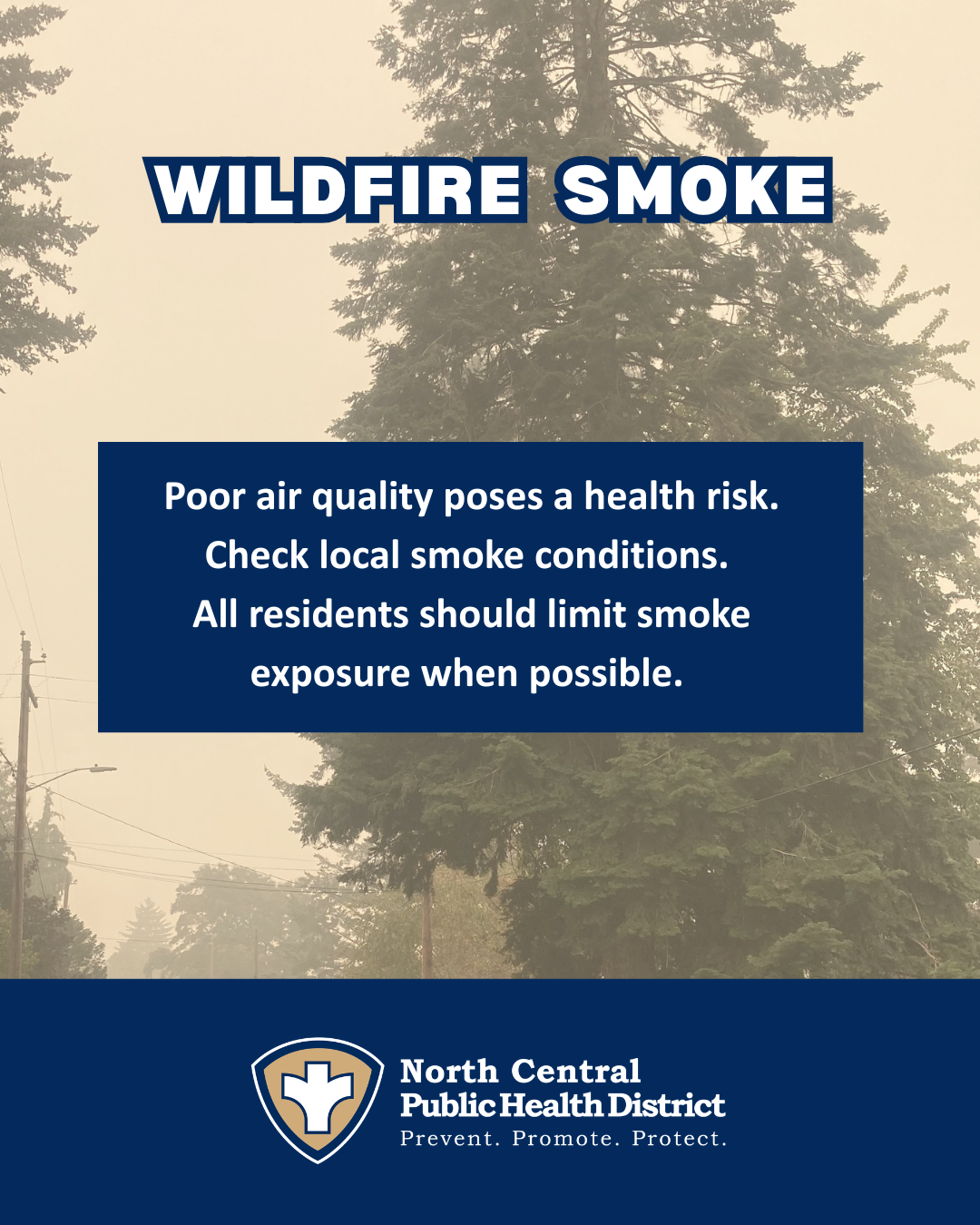
Poor air quality poses a health risk. All residents should limit smoke exposure when possible. Those with breathing or heart problems, older adults, and children should stay indoors when air quality is poor.
Air quality can change quickly. Visit the Oregon Smoke Blog and the Oregon Department of Environmental Quality’s (DEQ) Air Quality Index for current conditions. DEQ updates data hourly and color-codes it for easy reference. The DEQ’s 5-3-1 Visibility Index is also available if there is not an air monitor nearby. You can print a copy to have on hand if there is not an air monitor near you or for situations when you might not have internet.
To reduce health effects from smoke:
1. Check local smoke conditions from Oregon Smoke Blog or DEQ’s Air Quality Index.
2. Avoid outdoor work, exercise, or recreation when air quality is poor.
3. Stay hydrated to help reduce coughing, runny nose, and scratchy throat.
4. Limit driving in smoky areas. If necessary, keep windows closed and set ventilation to “recirculate.”
5. Stay indoors with windows and doors closed. Use high-efficiency filters or portable HEPA air cleaners to improve indoor air quality.
6. Those with asthma or other conditions should follow care plans, keep medications available, and contact your healthcare provider if needed.
7. If going outdoors, NIOSH-approved N95 respirators may provide protection. Proper fit is essential. Oregon OSHA provides mask-fitting videos in English and Spanish. N95 masks are not made in children’s sizes, and people with health conditions should consult a healthcare provider before use. Paper dust masks do not protect against smoke.
For cleaner-air shelters during smoke events, visit Mid-Columbia Community Action Council (mccac.com) for current locations and times. You may also call 211 or visit 211info.org. Public spaces such as libraries, retail stores, and the Mid-Columbia Senior Center may offer cleaner indoor air during business hours.
Additional Resources:
Wildfire Smoke FAQ for frequently asked questions about wildfire smoke and public health.
Oregon Smoke Blog for the latest on fires and air quality across the state.
DEQ’s Air Quality Index for current air quality conditions.
DEQ’s 5-3-1 Visibility Index for estimating smoke levels via visual observation.
Oregon OSHA Respirator use in the workplace.
(For more information, please contact North Central Public Health District at (541) 506-2600 or visit us on the web at ncphd.org or our Facebook page at facebook.com/NorthCentralPublicHealth.)